In the previous blog posts, we’ve explore two psalms of trust (Pss 11 and 14) and two laments (Pss 12–13). All four psalms explored the struggle of living for the LORD in a world that does not acknowledge God’s kingdom. God’s people can face oppression and injustice by persons who live by their own rules rather than embodying justice and righteousness.
These psalms testify to an unwavering trust in the LORD. Despite hardships, these prayers witness to a dogged and rich faith that can guide us on our journey as God’s missional people. Yet there is a subtle temptation when the wicked appear to prevail in the present. The temptation is lower our standards, maybe just a little, to perhaps lessen the cost of a life of faithfulness. Enter Psalm 15. Psalm 15 instructs God’s people in the habits of those committed to holy living in an unholy world.
Psalm 15 served originally as a liturgy for entering into the temple in Jerusalem. It connects love for God with love for neighbor. If the journey of faith ends in the praise and adoration of the LORD and his victory (Pss 146–150), this psalm reminds us of the importance of personal holiness and character as we live in anticipation of God’s future abundance.
Psalm 15 unpacks as a general question (verse 1) followed by a detailed answer (verses 2–5b). Verse 5b concludes with powerful promise.
Verse 1 opens the psalm by asking the LORD for the characteristics of a person who may enter into God’s presence. Psalm 15 does not set admissions requirements for a relationship with God. It is describing the lifestyle of a person who have received God’s grace. Psalm 15 invites us to answer a similar question today: What kind of person do I need to become in light of the grace and kindness that I’ve received from God in Jesus Christ?
The LORD’s answer to this question may seem surprising as it lacks any religious acts. For example, there are no references to sabbath or sacrifices. Instead, verses 2–5a focus on how we relate and treat others. In other words, it suggests that our love for God must manifest in our relationships with all people and especially with God’s people. Observe that there are ten lines of instruction in these verses. This is intentional. Just as there are Ten Commandments from Sinai (Exod 20:2–17 cf. Deut 5:6–21), Psalm 15 offers ten lines of ethical instruction to guide the godly in their walk with the
LORD.
These verses focus on practicing faithfulness in our relationships with others. This is the meaning of a blameless walk and right action. This involves speaking truthfully and not using our speech to injure others (2b–3). The holy life also means honoring God’s people rather than giving special privileges to those who reject God (4a). People also honor God by keeping their word (4b). The blameless life also is exemplified by blessing the poor with no interest loans and refusing bribes against someone who is innocent. Note that some of these practices may be costly in terms of money, loss of prestige in the eyes of the world, or crossing someone powerful.
God calls us to live this way counter-culturally as an abiding witness to God’s mission and kingdom. Verse 5b promises that faithfulness has its reward: security for all eternity.
What kind of person does this psalm invite you to become?
What is the most difficult challenging part of this psalm for you to live out?
What role does faithful service to your neighbors and to the poor play in your life as a follower of Jesus?
Showing posts with label faithfulness. Show all posts
Showing posts with label faithfulness. Show all posts
Thursday, September 10, 2015

Monday, August 31, 2015
Trusting God on the Journey of Faithfulness: Learning to Pray Psalm 12
The life of faithfulness is challenging. The world that we live in is complex. The issues of the day can be daunting. This psalm explores the isolation that God’s people can experience when they forget their foundation.
Psalm 12
Help, Lord, for no one is faithful anymore;
those who are loyal have vanished from the human race.
2 Everyone lies to their neighbor;
they flatter with their lips
but harbor deception in their hearts.
Verse 1 opens with a cry for “help” directed to the LORD. This is the Hebrew word hosanna that readers may recognize from the Gospel story of Jesus’ entry into Jerusalem on Palm Sunday. Hosanna means “save.” Thus it is more than just calling for “help.” The psalmist recognizes that it is the LORD alone to whom he can turn.
What is the reason for this call? The psalmist feels as though he is utterly alone in attempting to walk faithfully with the LORD. In verses 1b–2 the psalmist exclaims his belief that all of the faithful have vanished. There is no one who remains loyally committed to the ways of God. In fact, the psalmist declares that everyone speaks deceptively and plots ill. Have you ever felt this way? How do we pray when it seems as though we are the only ones who trust the LORD and care about his mission?
Verses 3–4 add specifics to the psalmist’s plea for help. The psalmist feels oppressed. The psalmist asks the LORD to silence all who using their voices for deceitfulness and boasting about their own power. Life confronts us with choices and differing philosophies. One subtle temptation involves the myth of self-reliance. We can deny the existence of God and power of our own faith by acting as if it is our talents and strength alone that determine our destiny. The psalmist recognizes his true need for God and is overwhelmed by a society in which this truth is denied. When self-reliance is overemphasized, we find a society shaped by selfishness and injustice. We treat resources as limited and hoard them for our own use or for the use of those whom we love. This psalmist is on the short end of this type of world.
The psalmist then shares the LORD’s response. The LORD is not for the self-reliant, but for justice. The LORD rises up to protect the poor and needy against those who claim self-reliance and self-determinism as they philosophy of life.
Verses 6–8 affirm the psalmist’s trust and confidence in the LORD’s care and protection. Unlike the wicked whose words are fickle and deceptive, the words of the LORD is sure and secure. They are like the purest silver or gold. They are money in the bank. Therefore, the psalmist knows that his life is safe. Regardless of how desperate the situation appears in the moment, the LORD safeguards the those who truly recognize their need for God. This psalm reminds us that the LORD is present for those who are desperate for what only God can do. O that we would all live our lives out of this sort of dependence!
What is the problem that confronts the psalmist in Ps 12?
How does the LORD answer the psalmist?
What warning does this psalm offer to those who pray it?
Psalm 12
Help, Lord, for no one is faithful anymore;
those who are loyal have vanished from the human race.
2 Everyone lies to their neighbor;
they flatter with their lips
but harbor deception in their hearts.
3 May the Lord silence all flattering lips
and every boastful tongue—
4 those who say,
“By our tongues we will prevail;
our own lips will defend us—who is lord over us?”
and every boastful tongue—
4 those who say,
“By our tongues we will prevail;
our own lips will defend us—who is lord over us?”
5 “Because the poor are plundered and the needy groan,
I will now arise,” says the Lord.
“I will protect them from those who malign them.”
6 And the words of the Lord are flawless,
like silver purified in a crucible,
like gold[c] refined seven times.
I will now arise,” says the Lord.
“I will protect them from those who malign them.”
6 And the words of the Lord are flawless,
like silver purified in a crucible,
like gold[c] refined seven times.
7 You, Lord, will keep the needy safe
and will protect us forever from the wicked,
8 who freely strut about
when what is vile is honored by the human race.
and will protect us forever from the wicked,
8 who freely strut about
when what is vile is honored by the human race.
Verse 1 opens with a cry for “help” directed to the LORD. This is the Hebrew word hosanna that readers may recognize from the Gospel story of Jesus’ entry into Jerusalem on Palm Sunday. Hosanna means “save.” Thus it is more than just calling for “help.” The psalmist recognizes that it is the LORD alone to whom he can turn.
What is the reason for this call? The psalmist feels as though he is utterly alone in attempting to walk faithfully with the LORD. In verses 1b–2 the psalmist exclaims his belief that all of the faithful have vanished. There is no one who remains loyally committed to the ways of God. In fact, the psalmist declares that everyone speaks deceptively and plots ill. Have you ever felt this way? How do we pray when it seems as though we are the only ones who trust the LORD and care about his mission?
Verses 3–4 add specifics to the psalmist’s plea for help. The psalmist feels oppressed. The psalmist asks the LORD to silence all who using their voices for deceitfulness and boasting about their own power. Life confronts us with choices and differing philosophies. One subtle temptation involves the myth of self-reliance. We can deny the existence of God and power of our own faith by acting as if it is our talents and strength alone that determine our destiny. The psalmist recognizes his true need for God and is overwhelmed by a society in which this truth is denied. When self-reliance is overemphasized, we find a society shaped by selfishness and injustice. We treat resources as limited and hoard them for our own use or for the use of those whom we love. This psalmist is on the short end of this type of world.
The psalmist then shares the LORD’s response. The LORD is not for the self-reliant, but for justice. The LORD rises up to protect the poor and needy against those who claim self-reliance and self-determinism as they philosophy of life.
Verses 6–8 affirm the psalmist’s trust and confidence in the LORD’s care and protection. Unlike the wicked whose words are fickle and deceptive, the words of the LORD is sure and secure. They are like the purest silver or gold. They are money in the bank. Therefore, the psalmist knows that his life is safe. Regardless of how desperate the situation appears in the moment, the LORD safeguards the those who truly recognize their need for God. This psalm reminds us that the LORD is present for those who are desperate for what only God can do. O that we would all live our lives out of this sort of dependence!
What is the problem that confronts the psalmist in Ps 12?
How does the LORD answer the psalmist?
What warning does this psalm offer to those who pray it?
Thursday, August 20, 2015
Through the Eyes of N.T. Wright: A Reader's Guide to Paul and the Faithfulness of God. Interview with Author Derek Vreeland
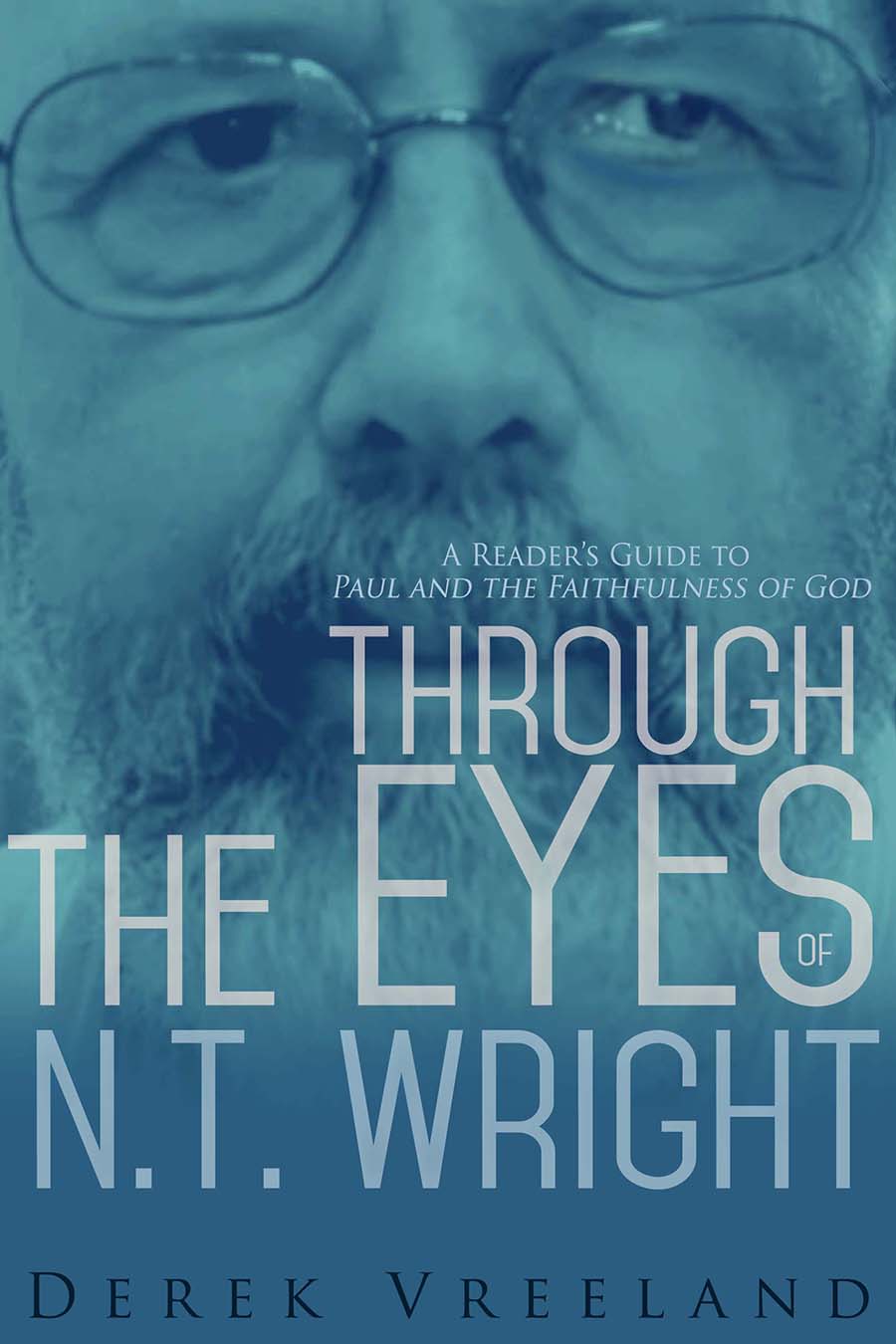
Today I want to post an interview with pastor and author Derek Vreeland. He recently published a new book Through the Eyes of N.T. Wright: A Reader's Guide to Paul and the Faithfulness of God
 that offers a popular reading of N.T. Wright's understanding of Paul. As such, Vreeland provides a helpful service to pastors and teachers by offering a substantive reading of Wright that is more detailed than an executive book summary. Vreeland also models for other missional leaders and pastors the fruit that comes from engaging the deep thinkers and scholars of our day.
When did you first become interested in N.T. Wright’s scholarship?
I had two seminary experiences and sadly did not read much of Wright. I first stumbled upon Wright in 2007 when I was teaching on Wednesday nights in the summer at the church I was pastoring at the time. I was wrestling with issues of theodicy and I read Evil and the Justice of God as a part of that teaching series. His book was one of many I read that summer and it did not really stand out. That is not the best N.T. Wright book to start with. Soon after I read Simply Christian and my interest in Wright grew. Simply Christian, which is not really that simple, captured my attention because I could see Wright was interested in the big picture of Bible, the grand narrative arc of Scripture, with a particular Christ-centeredness. From there I went on to read Resurrection of the Son and Jesus and the Victory of God, two of Wright’s larger academic books. These books grounded Christology not so much in patristics as in the Jewish context of Jesus. The study of the early church fathers is massively importantly, and I think Wright would agree, but before you see Jesus through the perspective of Nicea and Chalcedon you need to see Jesus through the perspective of the Gospel writers and Paul in the context of second temple Judaism. Wright is a biblical theologian more than a systematic theologian, so he is interested in rooting our reading of Jesus in history. This claim is not to say that the Christ of faith is opposed to the Jesus of history; quite the opposite. As Wright has expressed numerous times: the Jesus of history is the Christ of faith. We desperately need a fresh reading of Scripture within its historical context(s). Wright excels in grounding exegesis in history.
How has studying N.T. Wright’s work impacted your preaching and teaching?
The single most influential N.T. Wright book for me, and so many other people, has been Surprised By Hope. This book helped to ground my eschatology in the story the Bible is telling. Wright’s biggest impact in my preaching and teaching has been in the area of eschatology. I grew up in a Southern Baptist context shaped by a premillennial, “left behind,” rapture-before-the-great-tribulation view of eschatology. My view of the end was heaven for the righteous, hell for the wicked, and the earth...well I hadn’t given the earth much of a second thought. I assume if you would have asked me at 19 years-old what I believed about the earth at the end, I would have assumed it would be destroyed after the battle of Armageddon and final judgment. In my early days of a pastor, I preached a reductionistic “gospel” of “get saved” so you can go to heaven when you die. Wright changed all the gospel I preached. The end according to Scripture and the great Christian tradition is not leaving the earth for heaven, but heaven coming to earth, the resurrection of the dead, and the renewal of all things. This changed the gospel I preached, how I preached funerals, and how I pastored those struggling with chronic illnesses. The gospel is Jesus is Lord. He is ruling the earth from heaven and when he appears he will complete his project of new creation. Getting our eschatology right is important. One of the most helpful parts of Paul and the Faithfulness of God for me was Wright’s discussion of Paul’s reimagined eschatology. Paul connects ethics with eschatology. As a Jewish thinker, Paul’s worldview was shaped by the first-century Jewish eschatological paradigm of “this age” and “the age to come.” We are currently living in this present evil age, but our baptism into Christ connects us to the age to come. In between these two ages we are being transformed into the kind of people fit for the age to come. How we live today is based on who we are becoming. So our understanding of the end is not as open-handed as I was thought. I used to think it doesn’t matter what you believe about the end, because it will all work out the way God wants. Wright has caused me to rethink that false assumption. As I write in the beginning of chapter 6 in my book, eschatology is not the caboose at the end of the train; it is the engine driving the entire theological enterprise.
Can you explain in what ways your book is a “reader’s guide”?
N.T. Wright has written numerous books both on a popular level and on an academic level. Paul and the Faithfulness of God is an 1,700-page academic book on the theology of Paul. I, and many others, consider it to be a massively important book on Paul, offering the church a renewed vision of Paul’s theology. My book is a condensed summary of Wright’s book. I summarize in 100 pages what took him nearly 2,000 pages to write. As a “reader’s guide” my book is like a roadmap to help you navigate through the key conclusions Wright draws in his book about Paul’s theology.
Who is your ideal audience for your book?
I wrote my book with N.T. Wright fans in mind. This includes pastors, educators, and lay people whose theological imaginations have been shaped by Wright. I taught Paul and the Faithfulness of God as a nine-week class at my church last fall. To my great surprise I had 12-15 people come out to the church every Sunday night to listen to me lecture on Wright’s big book on Paul. I created a five-page outline for each class period and those notes became the skeleton for my book. So while I wrote my book for all N.T. Wright fans, in one sense the ideal audience for my book is the average church member who is interested in understanding, at some depth, the theology of Paul woven into the letters he wrote. You do not have to be familiar with Wright’s work in order to read my book. Ideally it would be good to read my book alongside Wright’s book, but I understand for some people that will be overwhelming.
What is one key takeaway that every pastor should know about Wright?
Wright has touched on so many important subjects, but the one thing pastors should know about N.T. Wight is that he loves the church and he has done his best academic work for the church. Not all scholars writing in the area of biblical studies and biblical theology are like that. There are plenty of academics who write in the area of New Testament studies who are not even practicing, confessing Christians! Wright loves the church. Currently he is a professor at St. Andrews University in Scotland, but before that time he served as the Bishop of Durham in the Church of England where he served quite a number of poor parish churches in a struggling diocese. He did not abandon the church when he left his post as bishop to serve again as a professor. He wants to serve the church through his academic work because he believes in the value of the local church for the vitality of towns and cities around the world. One his points of emphasis in Paul and the Faithfulness of God is the important of ecclesiology in Paul’s theology. He argues that the single thread binding together all of Paul’s letters is not salvation but the unity of the church. Paul does theological work in his letters to help his churches think Christianly and N.T. Wright is doing the same thing. He writes to help the church think through complex issues with a renewed mind, through the mind of Christ. I wrote my book because I share Wright’s love for the church and I want to help the church grapple with Wright’s work, because I believe it will help strengthen and mature God’s church.
How can interested readers find a copy?
Paperback and Kindle versions of my book are available from Amazon.com. Churches that would like to buy multiple copies for church use can order them directly from me at a discounted rate. Simply email me at derekvreeland@gmail.com for more information.
Where can we read more of your work?
I blog once a month for Missio Alliance on a variety of topics related to theology and church life. I have written two other books, one on the Apostles’ Creed and the other on spiritual formation. Information on those books is available on my website. I also do some preaching and teaching at my home church. Sermon audio can be found here.
Thanks Derek. I hope that your book reaches a wide audience.
Subscribe to:
Posts (Atom)